Projects
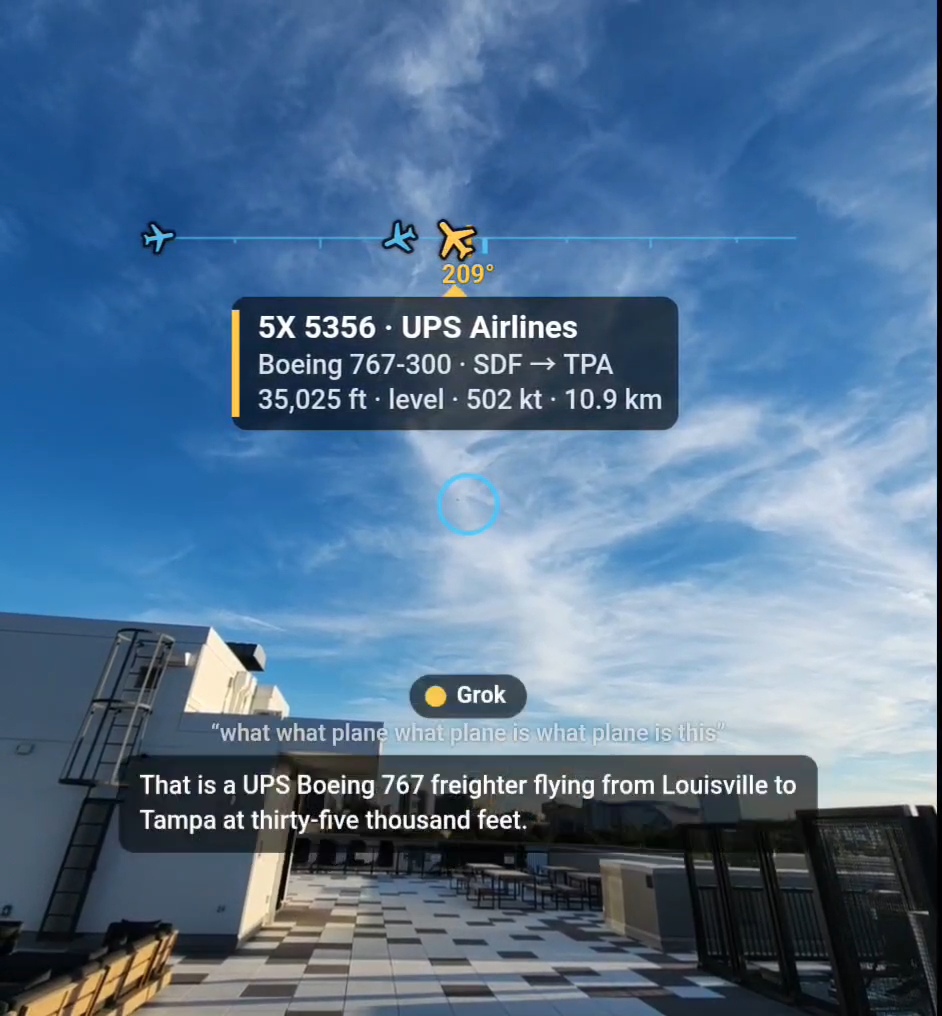
Sky-C2 HackGT 13 First Place Winners | 2026
Sky C2 is a heads-up display that brings aircraft identification directly into an air traffic controller's line of
sight. In today's control towers, controllers still scan the sky with binoculars, glance down at radar, and
cross-reference flight strips and callsign tables to figure out which dot is which plane. Inspired by the constant
stream of traffic over Georgia Tech into Atlanta, the world's busiest airport, my teammates Jaiden Lee, Allison Vu, and
I built Sky C2 to bring that information to the controller's eyes instead. It won first place at HackGT 13.
Running on a phone in a $10 Google Cardboard, Sky C2 overlays a compass headband that places every aircraft at its real
bearing. Centering one pulls up its callsign, airline, type, route, altitude, speed, and climb rate. Aircraft are
color-coded by status, with blinking red for emergency squawks, purple for medical flights, and green for military, and
a heading-up radar mini-map rotates with the wearer's head. Controllers can say "Hey Grok" to ask about the aircraft in
view and get spoken answers from live data. A live stream mirrors the wearer's view, overlay included, to another screen
so supervisors see exactly what the controller sees.
Click Here to view our
Devpost and click on the image to see what Sky-C2 looks like!
Viper View | 2025
We drew inspiration from Anduril’s Eagle Eye, a lightweight AR headset that overlays enhanced vision, spatial awareness,
mission objectives, location data, and friend-or-foe tracking onto the real world. While designed for defense use, it
showed us how powerful AR can be when it fuses perception with context. Viper View takes that idea into civilian,
low-cost hardware: we pair mobile AR with on-device AI to visualize people and space in real time and to capture rich,
world-anchored data. Our goal is to teach models the nuances of close-range human interaction and spatial behavior using
everyday devices.
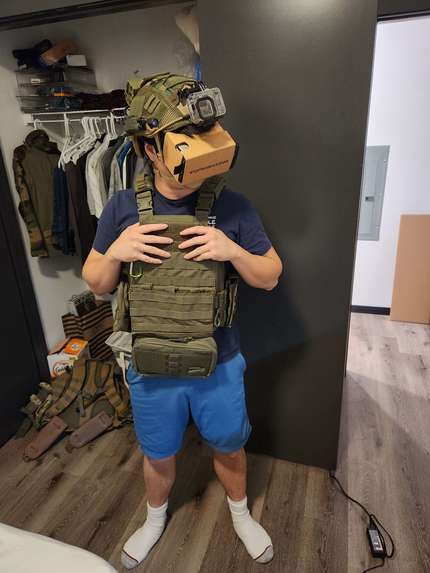
Viper View turns a phone in a VR headset into a live spatial capture tool. The app streams camera video while on-device
AI adds pose, segmentation, object and even thermal detection overlays. Wearers give quick feedback via gestures and
voice. The system uploads synchronized clips and labels to a server, producing world-anchored, real-world data. The
result is a low-cost pipeline that teaches models how people move, interact, and use space at scale.
Within 24 hours we were able to build out budget Anduril Eagle Eye with just a phone and a $9.99 Google Cardboard VR headset.
Click Here to view our Devpost and click on the image to see what Viper View looks like!
Tryon-AI | 2025
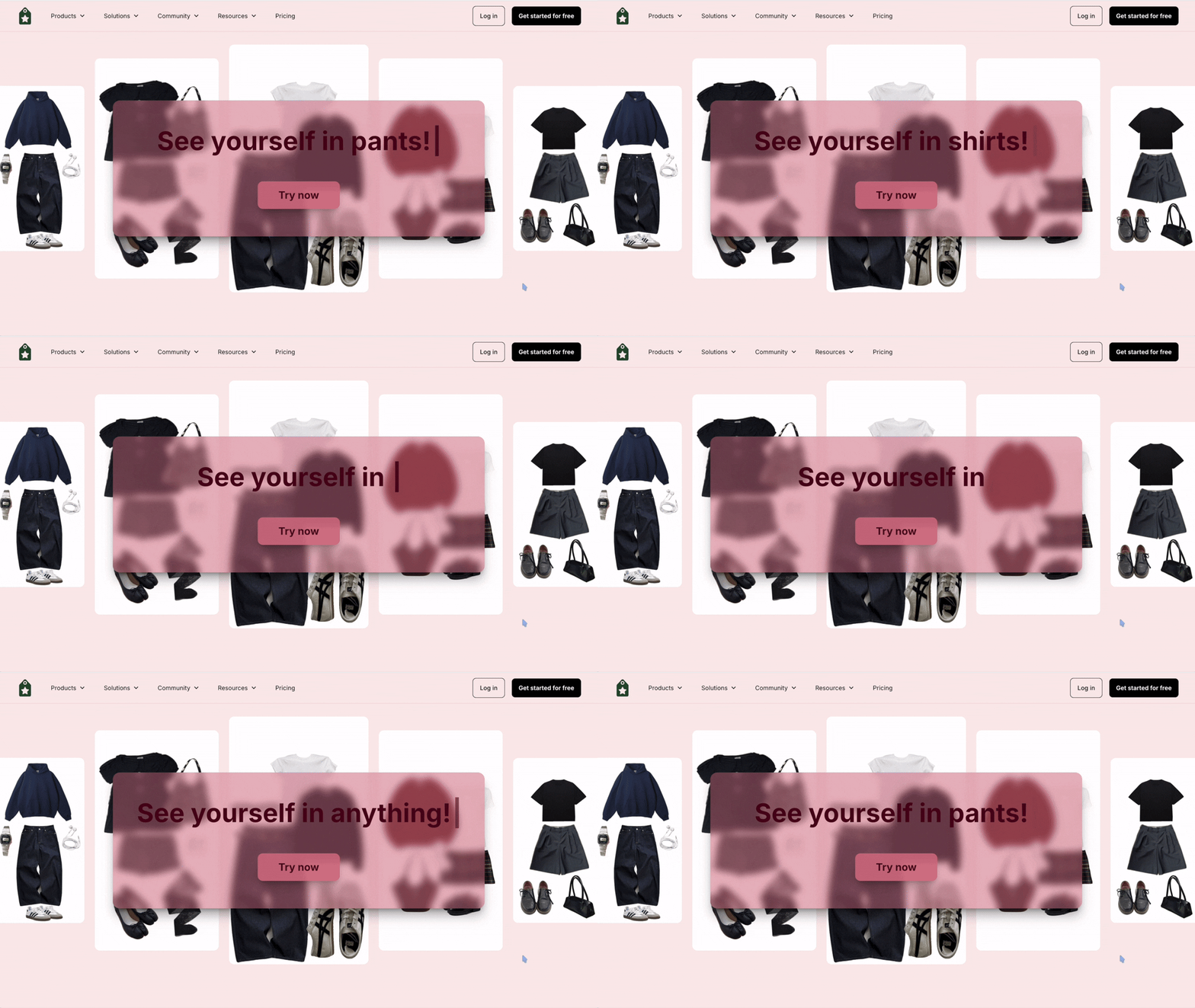
During the HackGT12 Hackathon, my team and I to make GTA's barber shop a reality. I had recently learned about Google's new Nano-Banana model and really wanted to try it out and test its capabilities.
Within 24 hours my team and I, Jaiden Lee, Allison Vu, and Bryan A, were able to build out Tryon-AI. A virtual changing
room for testing out creative fits.
It's like a character customization menu brought to your favorite fashion stores. Our platform lets you try literally anything you want with stunning realism.
Click Here to view our Devpost and click on the image to view a couple test fits!

Truckin AIP | 2025
Drawing from my previous experience in the trucking industry, I created a Fleet Management platform using Palantir Foundry and Artificial Intelligence Platform (AIP)
to streamline operations for logistics teams. The application features a real-time data ingestion pipeline powered by Kafka, along with built-in AI tools that assist
users in managing live telemetry, monitoring risk, and improving workflow efficiency.
Despite having no prior experience with Foundry or AIP, I was able to deploy a working MVP in just a few days, highlighting how powerful AIP and Foundry is for rapid prototyping and iterative development.
Hosting Immich and Open Media Vault on NAS | 2024
My NAS will be used for two main purposes, media backup and file sharing. The NAS is running Open Media Vault (OMV) for a nice way to monitor system performance and file systems or partitions. For file sharing, I had set up an SMB server on OMV which allows my PC, laptop, and Android to access files I constantly access and needs to be synced. For media backup I am using a service called Immich. With Immich, I can manually adjust settings that aren't accessible in other services like Google Photos. I fine-tuned the backup settings to transcode videos with near lossless compression without taking up significant network bandwidth to stream videos. Immich also allows me to fine-tune machine learning parameters for facial recognition which works significantly better than Google Photo's algorithm. In order to manage my NAS on OMV and access Immich remotely, I had bought a domain name and set up Cloudflare Tunnels using Cloudflare Zero-Trust to gain remote access to my NAS. Thanks to Cloudflare Tunnels, I am able to not only access the server remotely but also generate sharing links for friends and family who aren't on my Immich instance.
Build NAS from Scratch | 2024
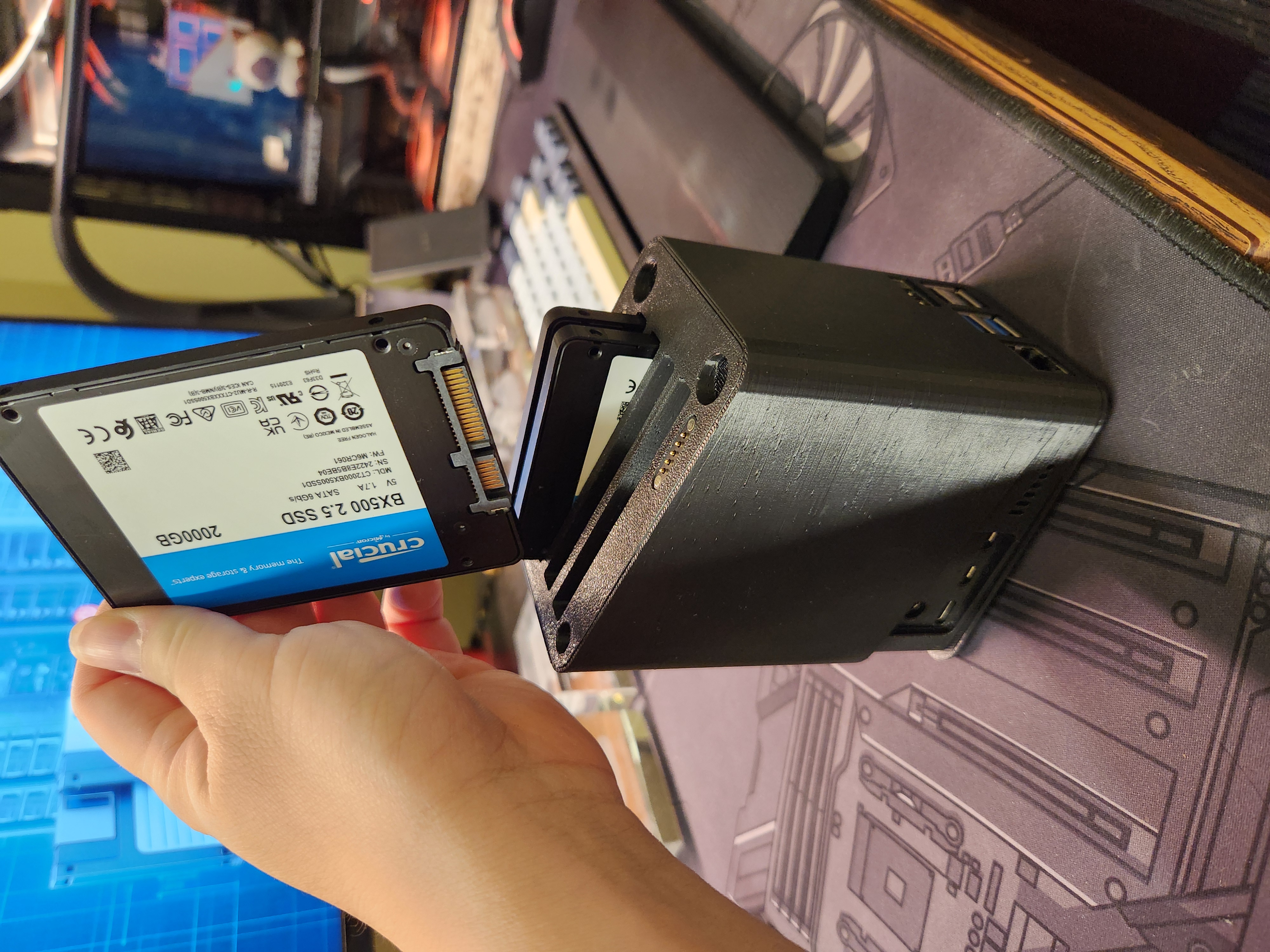
In order to cut down on subscriptions and my reliability on cloud service providers, I built a NAS running Ubuntu with Raid 5 from scratch. The NAS will be running on a Raspberry Pi 5 with a Penta SATA Hat from Radxa with three 2.5" SSDs from Crucial. The NAS currently has 3 Crucial BX500 2TB SSDs installed for a total capacity of 6TB and 4TB of usable storage with Raid 5. The storage can be expanded to a total of 5 drives for a total capacity of 10TB and 8TB of usable data. I designed and 3D printed a custom case that improves asthetics, structural integrity, and allows for easy access to add/replace drives. The top half of the case features a Radxa Penta Sata Hat Top Board that features a small 40mm fan to cool the drives, a small OLED display to show system information, and a button to interact with the NAS and OLED screen. The top half is fully removable thanks to small magnetic pogo pins I had soldered to the original wires that keep the two halves together magnetically. A simple Bash script is running as a background service which polls the top board and senses when the top board is disconnected and reconnected in order to automatically restart the top board service for a seamless user interaction.

Spotify Wrapper | 2024
Me and my team of four other Georgia Tech Computer Science majors: Jaiden Lee, Sherry Li, Dallin Liu and Jayden Wen, designed a website in Django that allowed users to create Spotify Wraps for our second CS2340 Project. In this project, we utilized the Scrum Agile methodology in our project where I acted as the Project Owner. Our project was to be completed in 3 sprints, each lasting about a week. Our final product will address all User Stories by creating a user friendly website design that scales on mobile. Users will be able to sign up and log in to create and view Spotify Wraps anywhere from the last week to the last year. Users can also choose to make their Spotify Wrapped public or private and have the option to share their Spotify Wrap on social media. Click on the image or Here to view our deployed site and Here to view our GitHub repository!

Agiler, AI ATL Hackathon | 2024
I competed in the 2024 AI ATL Hackathon with Jaiden Lee and Alison Vu. We had two days to build and deploy our hackathon project. For this hackathon, we created Agiler, an AI powered project management tool
that automatically updates the backlog based off of meeting summaries or recordings. We used a combination of Google Gemini and Anthropic Claude to analyze the backlog, project description, and any
inputs from the meeting recording/summary to create/update tasks and user stories in the backlog. Our tool will automatically link dependencies, estimate difficulty, and prioritize tasks. Our tool effectively
prevents projects from failing by enforcing good project management practices with the help of AI to automate busy-work for project managers. We used React in the frontend and FastAPI with Python in the backend.
We finally used Docker to deploy on GCR.
Click on the image or Here to view our deployed site. Click on the video icon or Here
to watch our demonstration video. Click Here for our hackathon Devpost.
foodr | 2024
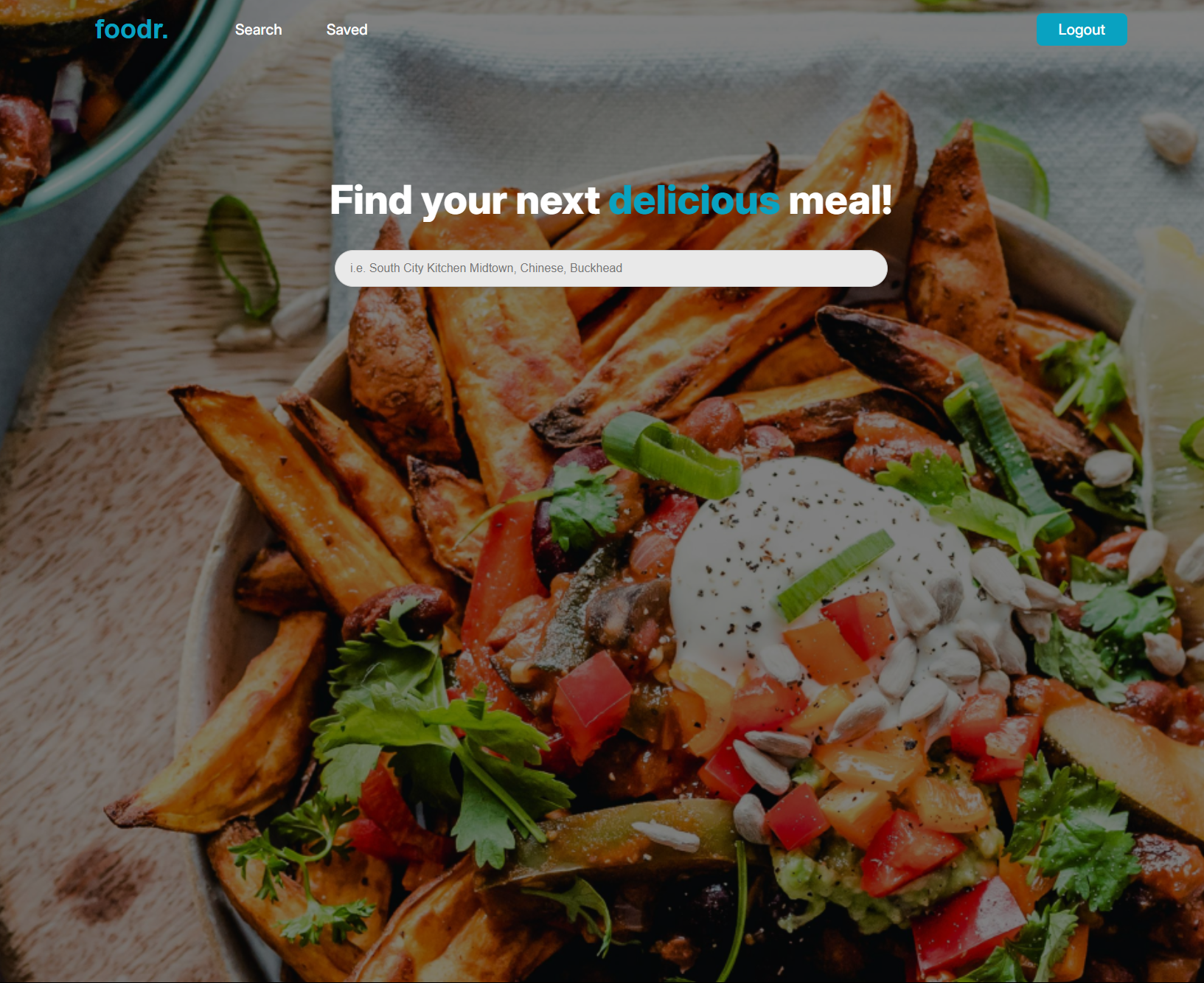
Me and my team of four other Georgia Tech Computer Science majors: Jaiden Lee, Sherry Li, Dallin Liu and Jayden Wen, designed a website in Django that allowed users to easily find nearby Restaurants for our first CS2340 Project. In this project, we utilized the Scrum Agile methodology in our project where I acted as the Product Owner. Our project was to be completed in 2 sprints, each lasting about a week. Our final product will address all User Stories by creating a user friendly website design implementing Google Places API with a custom skinned Google Maps API. Users will be able to sign up and log in to save and view favorited restaurants as well. Click on the image or Here to view our deployed site and Here to view our GitHub repository!
CipherAI | 2024
Through Buildspace Season 5, I had 6 weeks to create and iterate on a project. Me and my two partners, Jaiden Lee and Anshul Chelapurath, created CipherAI. CipherAI is an AI assisted interview prep. There are interview questions users can answer and test with our test cases. The built-in AI can give hints, ask follow-up interview questions, and suggest different problems depending on what the user struggles with. Click on the image to check out CipherAI.
Personal Website | 2024
This website will be continously updated to reflect my most recent accomplishments and projects. This project was built with raw HTML, CSS, and vanilla javascript. No libraries or frameworks were used; everything from the animations to the modals were built from scratch.
Custom Built Keyboard | 2024
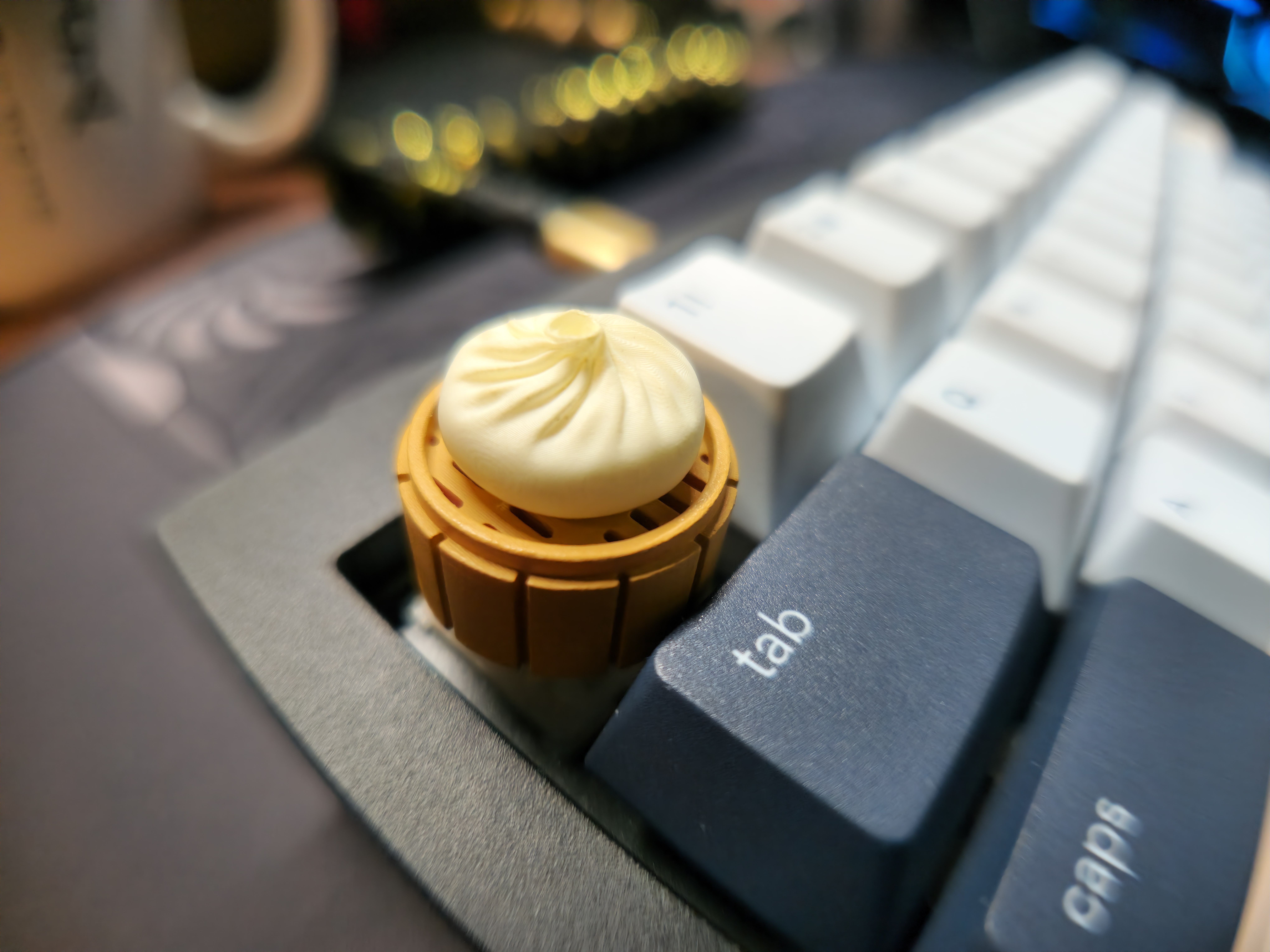
After months of researching and tired of my 20 dollar keyboard, I sought to build my own keyboard. My keyboard uses the Keychron Q2 Max chasis, the Iqunix Moonstone Turbo 45g linear switches, and Winterglow Eve keycaps from Osume. In addition, I also modded the keyboard with the force-break mod, tempest tape mod, and switched out the stock stablizers with Durock stabilizers. Click on the image on the left to open a photo gallery or click the title to view the build video on Youtube (the recording unfortunately makes the keyboard sound a lot clackier than real life).
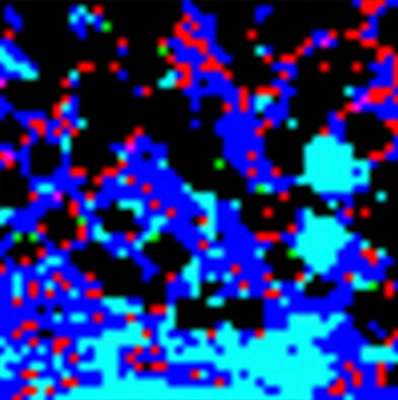
Image RGB Change of Basis | 2024
Inspired by Dr. Haiyu Zou showing me applications of spectural decomposition in image compression in my MATH 1564 Honors Liner Algebra course, I decided to create a change of basis program for images using Python. This program can take any number of colors in the RGB color space to change the color basis to something other than red, green, and blue. The program will take in a set of RGB vectors and get rid of any vectors that creates a cross product of 0 with any other vector such that the set of vectors left over are all non collinear and have a magnitude greater than 0 which creates the new basis. If the cardinality of the basis is three or more, the image will stay the same but the color vectors of each pixels would change according to the transition matrix created from the new color basis. If the cardinality of the basis is less than three, a projection matrix would be created where every pixel in the image would undergo an orthogonal projection onto the new color subspace which allows for some unique image filters to be applied and certain details previously unoticable to the human eye to now stand out.
Custom Built Workstation | 2023
Built my first personal computer during Black Friday with a budget of $1,700 tailored towards my needs for
productivity with an emphasis on machine learning. This PC is a powerful workstation that enables me to do anything
computationally intensive. Click on the video to see a gallery of photos or the title to watch the build video!
Click Here to see all PC builds.
CPU: AMD Ryzen 7 7700 (overclocked)
Cooler: Deepcool LT720 360mm AIO
Mobo: ASUS TUF AM5 B650-PLUS ATX
RAM: 32gb (16x2) DDR5 6000Mhz CL30-38-38-96
GPU: Gigabyte RTX 4070 (overclocked)
Storage: 2TB M.2-2280 Crucial P5 PCIe 4.0 X4 NVMe SSD
PSU: Corsair RM1000x (80+ Gold) 1000 W ATX PSU
Case: Lian Li O-11 Dynamic
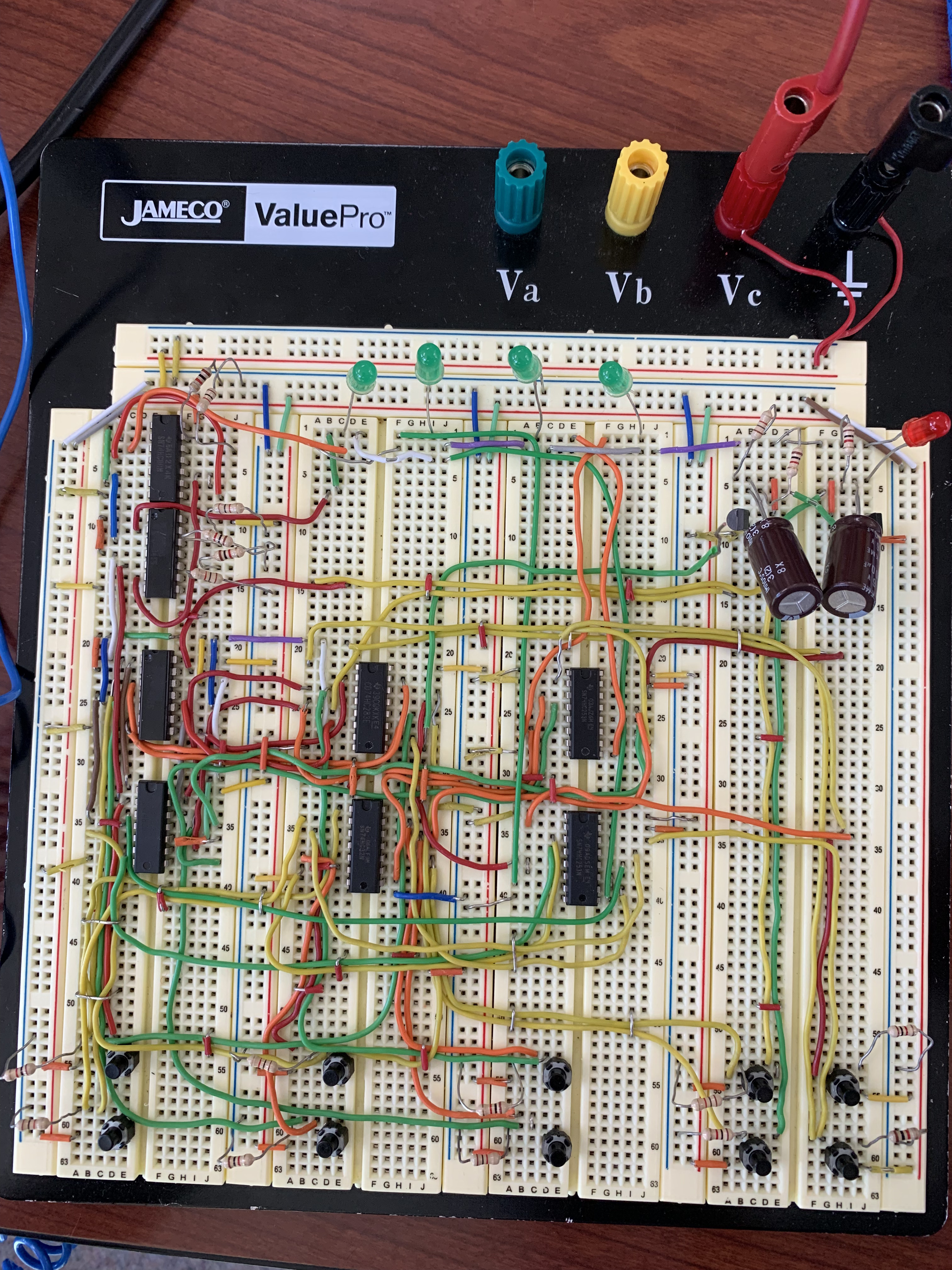
Four-bit, Four-function Modular Binary Calculator | 2022
During my time at Virginia's Summer Resedential Governor's School, I learned the fundamentals of electrical engineering and breadboard design. I went from designing logic gates with transistors to building clocks, binary counters, and even calculators. The project I'm most proud of is my four-bit four-function calculator shown in the image on the left. I started off by building full adders and chaining them together (images 3 and 4 in the gallery) to creating a four-bit four-function calculator (images 1 and 2 in the gallery). The two buttons on the very right are for selecting one of four modes: bitwise OR, bitwise AND, binary addition, and binary subtraction. The results are displayed at the top using four green LEDs and if an overflow occurs, the red LED will flash. Multiple calculators can also be chained together (second image in the gallery). Click on the image of my calculator on the left to view the gallery.

Automated Stock Market Analyzer | 2021 - 2024
I created a day-trading assistant in Python that used Yahoo Finance's downloadable CSVs to grab historical stock data and send alerts/notifications
whenever certain conditions were met. I used modified versions of this day-trading assistant during investment competitions
through the investment club I ran at my high school.
2024 Update V2.1 (complete redesign):
This updated code now automatically runs at key specific times during active trading hours daily (keeping track of holidays) using Windows Scheduler. This script uses Pyppeteer
in Python to webscrape live market data and records them in a JSON file to keep track of historical data throughout the trading day. In combination with
YFinance API to grab past week closing prices, the script will automatically send different alerts through email to all recipients depending on the conditions met.
The script will record stock data and check conditions for every stock listed in a JSON array.
2025 Q1 Performance Update:
The automated program enabled me to realize a net portfolio gain of +24% from January-April 2025 despite a period of poor market performance across the world.
Encoder and Decoder for Texting Between Friends | 2020
A friend and I came up with a fun way to text in secret by inserting random characters in between every letter of our message. Manually encrypting and decrypting was a huge pain so I created a program in Java that uses string indexing and concatnation to encrypt and decrypt messages easily.
Planned Projects Roadmap
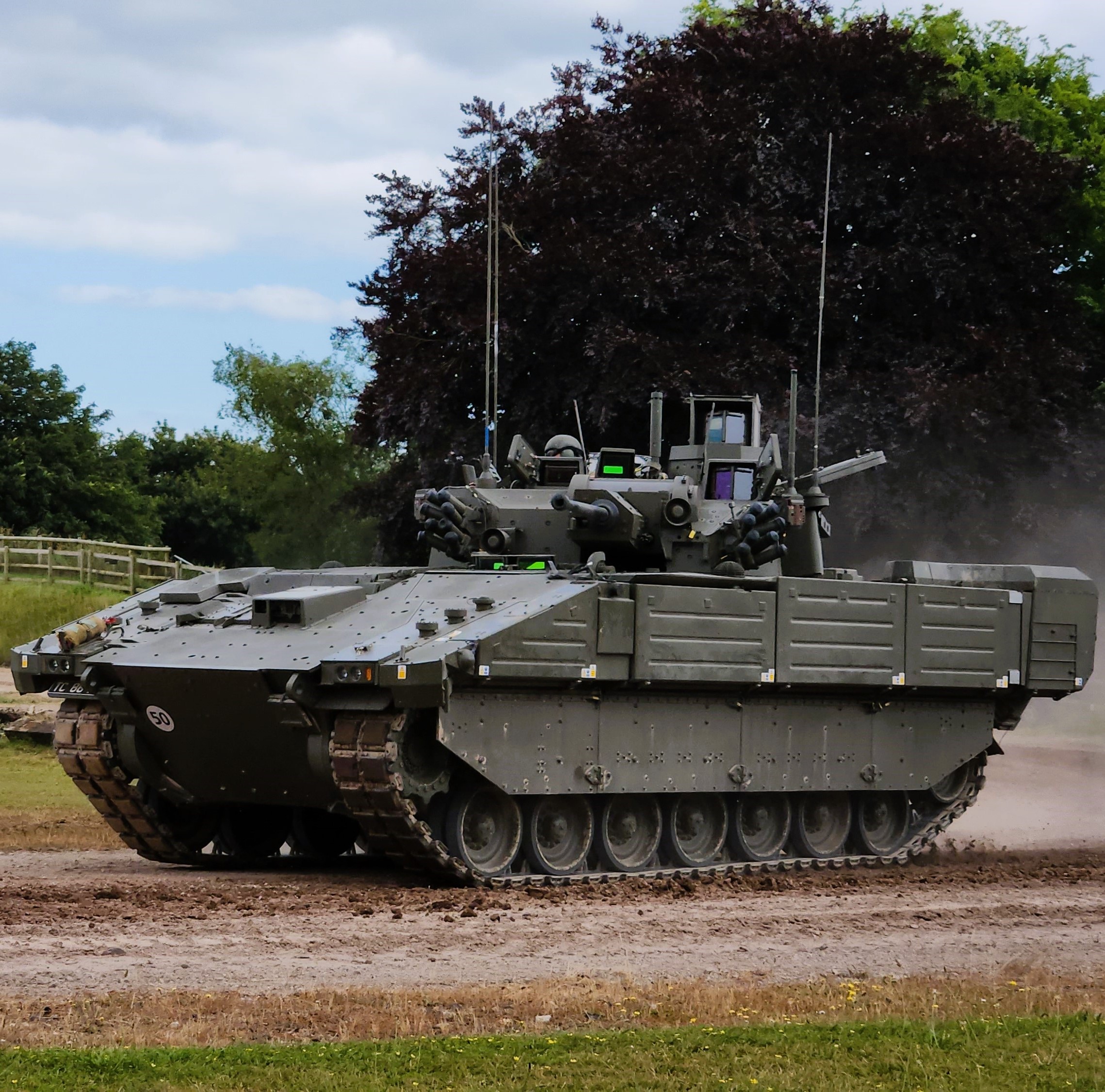
Recreating Project Maven Using War Thunder and Combat Footage | Planned
I plan on training an AI to recognize military equipment down to the specific model. I will pretrain the AI on War Thunder game footage and then train it on combat footage. The goal is to have the AI recognize different weapon systems down to its model to enhance situational awareness and reduce blue-on-blue incidents.